
Casting the Room, Not the Role
A great cast is a combination, not a collection of stars.
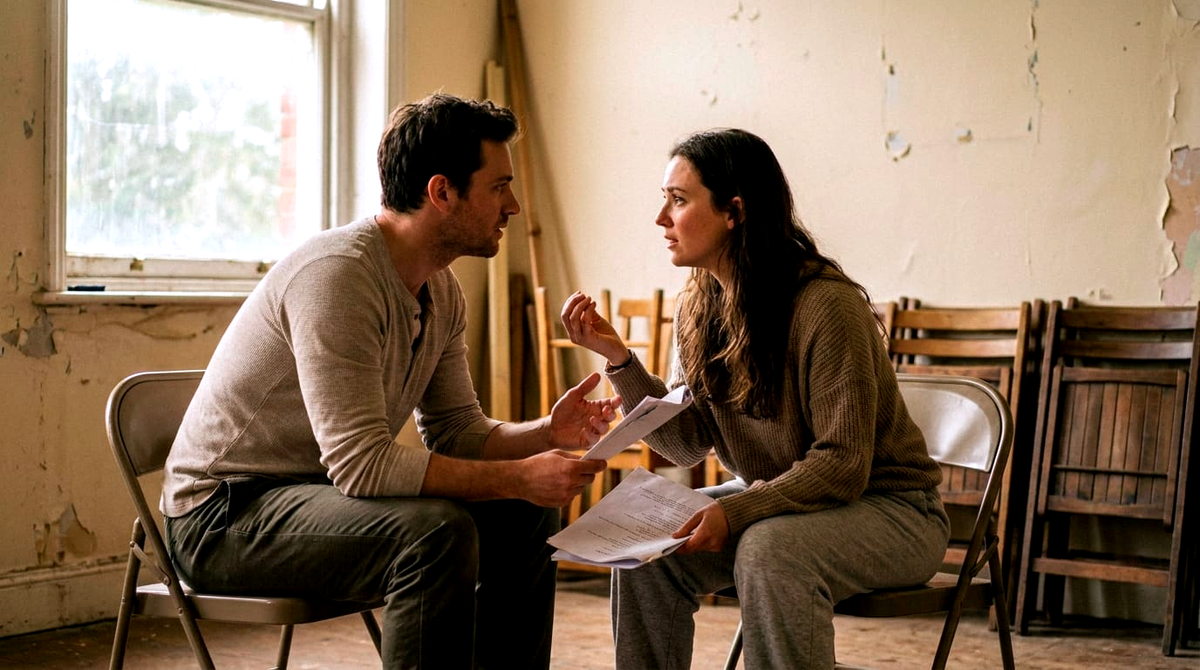
When you're new to directing, casting feels like a shopping trip. You've got a list of roles, you watch people audition, and you tick off the best performer for each part as they come through the door. Best lead, best love interest, best comic turn, job done. It seems logical. It is also, quite often, how you end up with a cast of brilliant individuals who don't add up to a show.
Because a play isn't a collection of roles. It's a set of relationships. And you can't audition a relationship by watching one person at a time.
Think about what actually has to happen on your stage. Two people have to convince an audience they've been married for thirty years, or that they'd die for each other, or that they hate each other with the heat of a thousand suns. That's not a quality either actor possesses on their own. It lives in the space between them. The most technically gifted performer in the room might give you nothing alongside the person you've cast opposite them, while two slightly rougher actors spark off each other in a way that lights up the whole piece.
So cast the room, not the role. When you can, get people reading together, in the pairings and groupings the play actually needs. Watch what happens in the gaps. Does she listen to him, or just wait for her cue. Does he change when she changes. Is there something alive between them, or two separate performances happening at the same time. That liveness is the thing you're really hunting for, and it's almost impossible to see when you audition people in isolation.
This also means accepting a hard truth. Sometimes the best individual audition shouldn't get the part. If your strongest actor towers over everyone else, or simply doesn't connect with the person who has to be their other half, then casting them does the show no favours. A cast needs to balance. Ages, energies, physical contrasts, the way voices sit next to each other, all of it is part of the picture you're composing. You're not assembling a team of soloists. You're casting a band.
And there's a duty of care wrapped up in all this. When someone doesn't get a part, it's very rarely because they were bad. It's because of the combination, the pairing, the shape of the whole. They will almost never know that, and they'll often quietly conclude that you didn't rate them, or didn't like them. Where you can, say a kind and honest word. Tell them it was about the fit, because it almost always genuinely was. People remember how they were treated at an audition far longer than they remember whether they got the role, and the actor you let down gently this year is the one you'll be desperate to cast next year.
Casting is the most important directing you'll do, and most of it happens before a single rehearsal. Get the combination right and the show half-directs itself. Get it wrong, and no amount of clever blocking will save you. Cast the room.